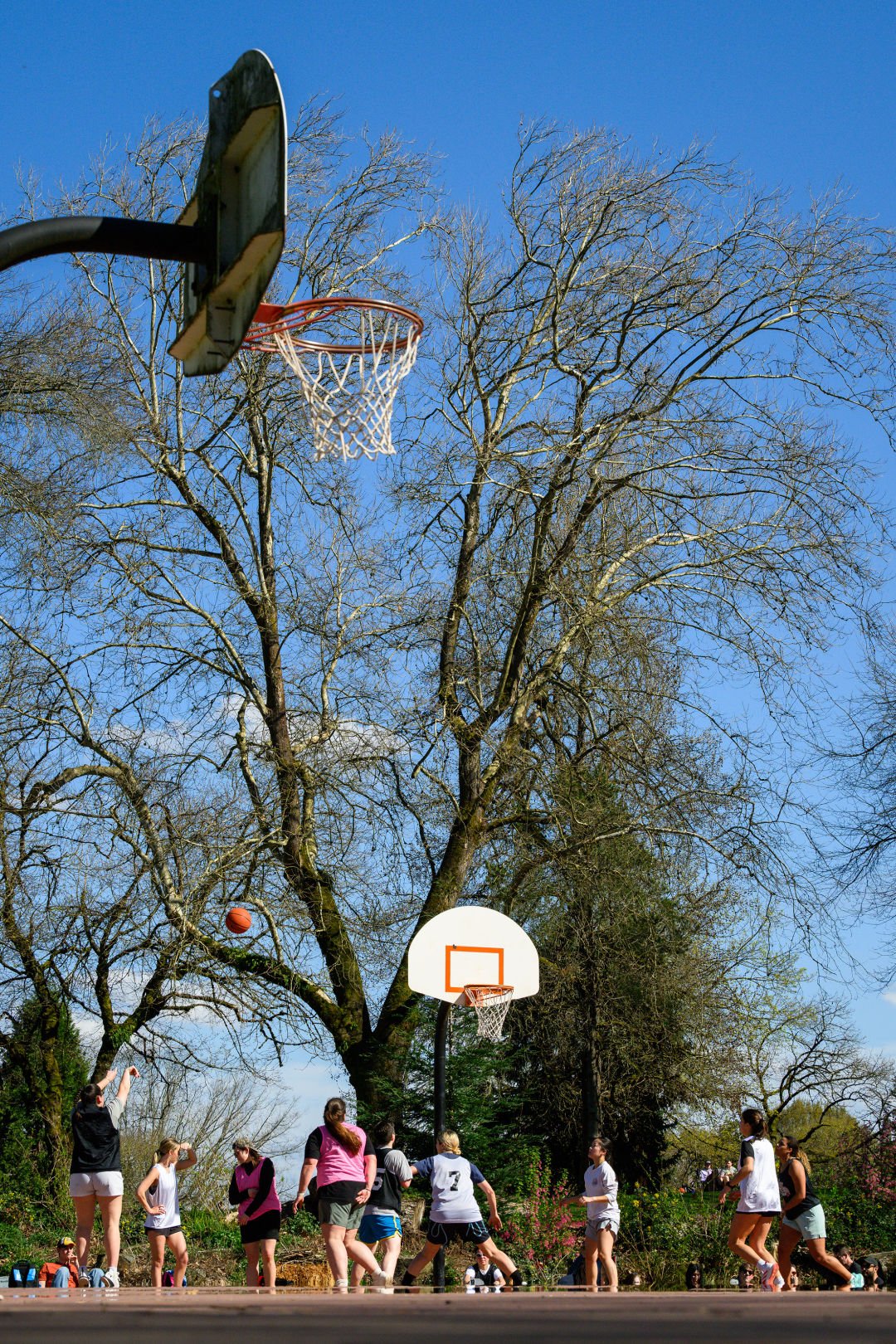
Coming in Hot
Published by Portland Monthly in April 2026. Photo by Molly J. Smith.
SUNDAY, 1994, SKYLINE ELEMENTARY, on sloping courts warped by years of puddles. I’m 9 years old, haven’t crested five feet, can’t dribble with my left. Heading for a layup all the same. My mom, all of five-foot-two, basketball coursing through her Polish-Filipino veins, blocks my shot, knocking me to the ground. She chases down the ball, races to the other hoop, hits the layup, then celebrates with a little “woo!” My mom isn’t usually so cruel. “When you’re small, you have to be tough,” she tells me, scooping me and my newly skinned knee off the ground. My shock cracks open the meaning behind her words: We’re the underdogs. Never give up, even when they knock you down. She smiles devilishly, and we play again.
Being the underdog. Being tough. That describes women basketball players the world over. They’ve been banned, dissed, dismissed, underpaid, and undercovered by the media. But ever since James Naismith put two boxes on poles and dreamt up the sport in the 1890s, they’ve never stopped scooping each other up and running it back. In 2026, we’re living in a watershed year. The WNBA is undergoing enormous growth and change, with a $2.2 billion media rights deal over 11 years that will give players a platform unlike any they’ve had before. At ESPN, Sunday-night baseball is out and “Women’s Sports Sundays” is in; the network will air WNBA and National Women’s Soccer League games on nine Sundays in prime time.